Green Color Hex Code
Green color hex codes are associated with nature, growth, health, sustainability, and success. Green is commonly used in finance apps, eco-friendly brands, and positive action indicators.
Popular Green Color Hex Codes
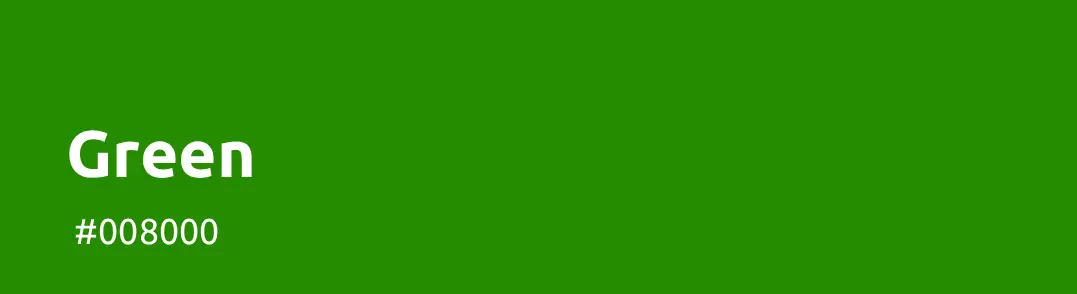
Green Color Hex Code (#008000)
Green is a color strongly connected to nature, balance, and growth. It appears everywhere in the natural world, from forests and fields to plants and trees, which makes it feel familiar and calming. Because of its versatility, green is widely used in digital design, branding, interiors, and visual communication.
This page explains the green color hex code, its background, psychological meaning, related shades, color combinations, and how green is commonly applied in modern design systems.
What Is Green Color?
Green is a secondary color created by mixing blue and yellow. It sits in the center of the visible color spectrum, which contributes to its balanced and restful appearance. Depending on the ratio of blue and yellow, green can appear fresh and vibrant or deep and earthy.
In digital design systems, a commonly accepted reference value for standard green is shown below. This value is frequently used as a baseline green in web design, UI elements, and graphic work.
- HEX: #008000
- RGB: rgb(0, 128, 0)
Green Color Code Values
Green Color Conversion Table
| Color Model | Value |
|---|---|
| HEX | #008000 |
| RGB | rgb(0, 128, 0) |
| CMYK | 100%, 0%, 100%, 50% |
| HSL | 120°, 100%, 25% |
| HSV | 120°, 100%, 50% |
| Pantone (Approx.) | Pantone 349 C |
These values align with commonly used standards across digital displays, print workflows, and professional color systems.
History of Green Color
Green pigments have been used by humans since ancient times, often derived from plants, minerals, and natural compounds. Early civilizations used green in art, decoration, and symbolism to represent fertility, renewal, and life.
Over time, green gained broader meanings. It became associated with agriculture, prosperity, and harmony, while modern usage expanded into sustainability, health, and environmental awareness.
Meaning and Psychology of Green
Green is closely associated with balance, growth, and restoration. It is considered one of the most restful colors for the human eye, which is why it often feels calming and reassuring. Green creates a sense of stability without feeling dull.
- Represents nature and renewal
- Symbolizes growth and balance
- Creates a calming and refreshing effect
- Suggests health, safety, and harmony
Related Shades of Green
Green includes a wide range of shades, each with a distinct mood. Lighter greens feel fresh and energetic, while darker greens feel grounded and sophisticated.
- Light Green
- Mint Green
- Olive Green
- Emerald Green
- Forest Green
- Dark Green
Green in Modern Design
In modern design, green is widely used to communicate sustainability, wellness, and balance. It works well in both digital and physical environments and pairs naturally with many other colors.
- Web design uses green for success states and highlights
- UI design uses green to indicate positive actions
- Branding uses green to suggest eco-friendliness
- Interior design uses green to create calm spaces
How to Use Green Color Effectively
Web and UI Design
Green works well for buttons, confirmations, and positive feedback. It should be paired with sufficient contrast to maintain accessibility.
Branding and Marketing
Brands use green to communicate trust, health, and sustainability. It is common in finance, wellness, and environmental industries.
Print and Visual Media
In print, green feels natural and balanced. Darker greens often appear more formal, while lighter greens feel fresh.
Interior and Product Design
Green adds harmony and comfort to interiors. Muted greens work well for large areas, while brighter greens are effective as accents.
Green Color in Accessibility and Readability
Green generally offers good readability when paired correctly. Dark green works well with light text, while light green requires darker text for proper contrast. Maintaining contrast ensures green remains accessible across devices.
Frequently Asked Questions
What color is this green?
This green refers to the standard digital green represented by the hex code #008000.
What colors go with green?
White, beige, brown, blue, yellow, and gray go well with green.
What does the color green represent?
Green represents nature, growth, balance, and renewal. It is often associated with health and harmony.
What hexadecimal value the light green color has?
A commonly used light green hex code is #90EE90, though many light green variations exist.
What does the colour green signify?
Green signifies growth, freshness, stability, and a connection to nature.
What goes with dark green?
Dark green pairs well with white, cream, gold, brown, and muted neutrals.
What are the two colors that make green color?
Green is made by mixing blue and yellow together.
You may also like
Latest from the Blog
Tips, guides and tutorials to help you get the most out of our tools