Blue Color Hex Code
Blue color hex codes are widely used in web design to represent trust, calmness, stability, and professionalism. Blue is a popular choice for corporate websites, technology brands, and user interfaces.
Popular Blue Color Hex Codes
Blue Color Hex Code (#0000FF)
Blue is one of the most widely used and universally recognized colors. It is strongly associated with calmness, trust, and clarity, which explains its popularity in technology, finance, healthcare, and everyday digital interfaces. From the sky above to the oceans below, blue feels familiar and reassuring.
This page explains the blue color hex code, its background, psychological meaning, related shades, color combinations, and how blue is commonly used in modern digital and visual design systems.
What Is Blue Color?
Blue is a primary color, meaning it cannot be created by mixing other colors. It sits between green and violet on the visible color spectrum and reflects shorter wavelengths of light. Because of this, blue often feels cool, stable, and calming to the human eye.
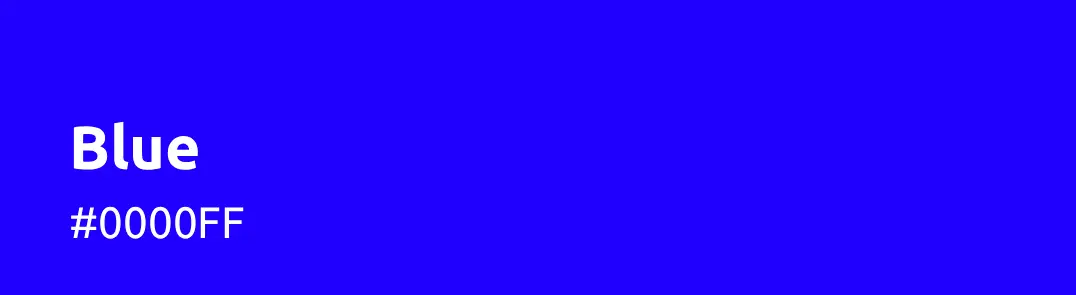
In digital color systems, blue is represented by full blue intensity with no red or green. The most commonly accepted standard blue color values are shown below.
- HEX: #0000FF
- RGB: rgb(0, 0, 255)
Blue Color Code Values
Blue Color Conversion Table
| Color Model | Value |
|---|---|
| HEX | #0000FF |
| RGB | rgb(0, 0, 255) |
| CMYK | 100%, 100%, 0%, 0% |
| HSL | 240°, 100%, 50% |
| HSV | 240°, 100%, 100% |
| Pantone (Approx.) | Pantone 2935 C |
These values remain consistent across digital displays, print workflows, and professional color systems, making blue one of the most reliable reference colors in design.
History of Blue Color
Historically, blue pigments were difficult and expensive to produce. Ancient civilizations used minerals such as lapis lazuli to create blue dyes, which made the color rare and highly valued. Because of this, blue was often associated with importance, authority, and spirituality.
With the development of synthetic pigments, blue became more accessible and widely used. Today, it is one of the most dominant colors in branding, technology, and visual communication.
Meaning and Psychology of Blue
Blue is closely linked to trust, stability, and calmness. It tends to lower visual tension and create a sense of reliability, which is why many professional and institutional brands rely on it. Blue can also encourage focus and clarity in environments that require concentration.
- Represents trust and dependability
- Creates a calming and reassuring effect
- Encourages focus and mental clarity
- Feels professional and balanced
Related Shades of Blue
Blue includes a wide range of shades that vary in brightness and depth. Lighter blues feel open and refreshing, while darker blues appear strong and formal.
- Light Blue
- Sky Blue
- Navy Blue
- Royal Blue
- Dark Blue
- Midnight Blue
Blue in Modern Design
In modern design, blue is one of the most versatile colors. It adapts easily across industries and works well in both minimal and complex layouts. Blue pairs naturally with neutrals and provides excellent readability when contrast is handled correctly.
- Web design uses blue for navigation and trust signals
- UI design uses blue for links and interactive elements
- Branding uses blue to communicate reliability
- Interior design uses blue to create calm environments
How to Use Blue Color Effectively
Web and UI Design
Blue works well for buttons, links, and navigation elements. It should be paired with sufficient contrast to maintain accessibility and readability.
Branding and Marketing
Brands use blue to communicate trust, professionalism, and long-term stability. It is especially common in technology and financial sectors.
Print and Visual Media
In print, blue feels clean and controlled. Darker blues often appear more formal, while lighter blues feel approachable.
Interior and Product Design
Blue adds calmness and balance to interiors. Softer blues work well for large areas, while darker blues are effective as accents.
Blue Color in Accessibility and Readability
Blue generally offers strong readability when paired correctly. Dark blue works well with white or light text, while light blue requires darker text to maintain contrast. Proper contrast ensures accessibility across screens and printed formats.
Frequently Asked Questions
What color is this Blue?
This refers to the standard digital blue represented by the hex code #0000FF.
What hexadecimal value the Blue color represent?
The hexadecimal value for standard blue is #0000FF.
What colours can you mix to make blue color?
Blue is a primary color and cannot be made by mixing other colors.
How to make color dark blue?
Dark blue can be created by adding black or a small amount of complementary color to blue, or by reducing lightness in digital color systems.
How many shades of blue are there?
There are hundreds of recognized blue shades across design systems, with millions of variations possible in digital color models.
What colors go with dark blue?
White, beige, gray, gold, light blue, and soft pastels pair well with dark blue.
How to find the hex code of a color?
The hex code of a color can be found using either a color picker tool that identifies the hexadecimal value of a selected color or using Hex Color Generator & HTML Color Codes by Omnitools..
How many blue colours are there?
Digital color systems allow millions of blue variations, while standardized systems define hundreds of named blue colors.
Latest from the Blog
Tips, guides and tutorials to help you get the most out of our tools